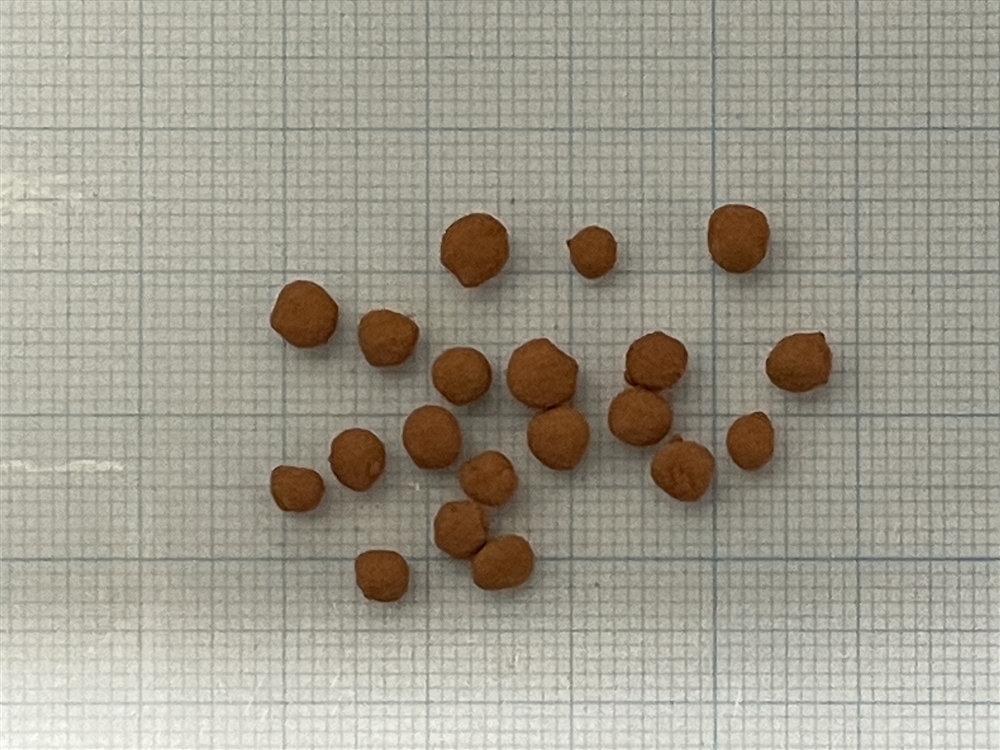
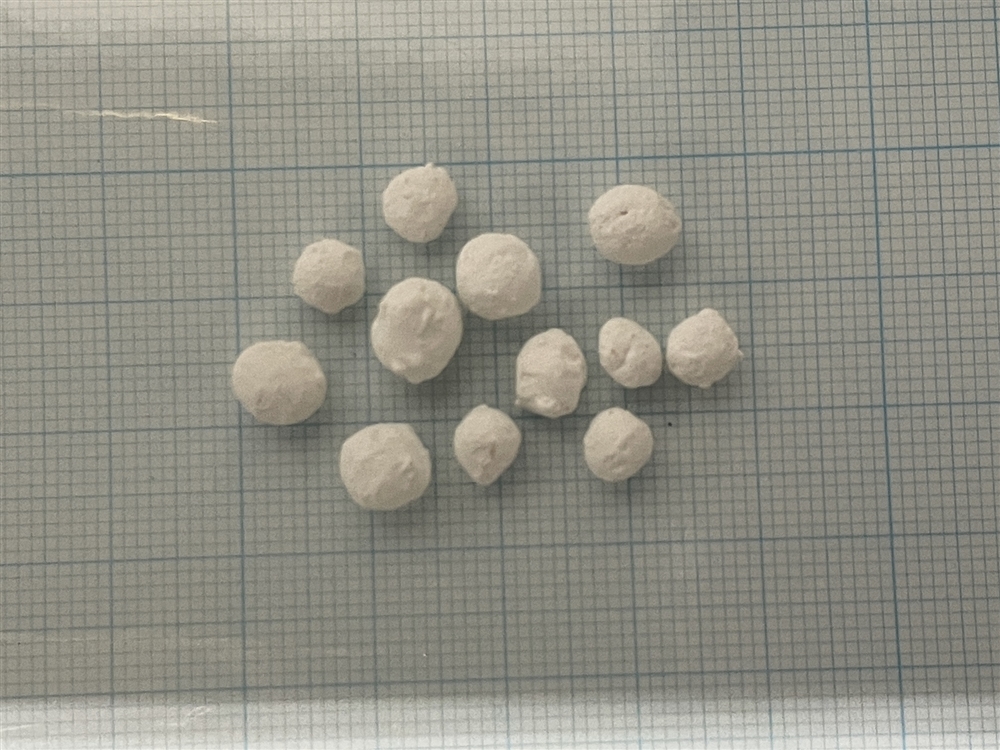
Struggling with the disposal of incineration ash?
In recent years, as environmental regulations have been strengthened to achieve a sustainable society, the resource recovery of incineration ash generated from waste incineration has become one of the key challenges. However, incineration ash is unstable in nature and difficult to handle, which can pose a barrier to advancing appropriate resource recovery processes.
Our mixing and granulation technology improves the handling properties of incineration ash by processing it into a more manageable form and texture, thus contributing to its resource recovery.
Solution Proposals / Processing Example for Improving Handling Properties and Resource Recovery through Granulation of Incineration Ash
The Intensive Mixer has a proven track record in applications such as ash mixing, granulation, kneading, and slurry preparation. Materials treated to prevent the leaching of harmful substances (through solidification) in accordance with soil environmental standards are not only disposed of as waste but are also reused as materials for roadbeds, pavements, and backfill, as well as other civil engineering applications.
This report will focus specifically on examples of the granulation process. Challenges and Advantages Expected from Granulation Process
| Challenges Addressed by Granulation | Advantages of Granulation |
|---|---|
| Difficulty in handling powders | Improved flowability and handling, with reduced dust scattering |
| Inefficiency in storage and transportation (due to low bulk density) | Increased bulk density, improving storage and transportation efficiency |
| Risk of hazardous substance leaching | Reduction of leaching through surface coating and additives |
| Issues related to work environment and safety caused by dust | Reduced inhalation risks and dust explosion hazards |
| Increased costs of landfill and disposal | Reduced volume for burial, and lower transportation and disposal costs |
Our Technical Center also offers consultations on sample production using actual powders and assessments of process suitability and feasibility.
When considering ways to improve the handling properties of incineration ash or explore resource recovery options, please feel free to contact us.
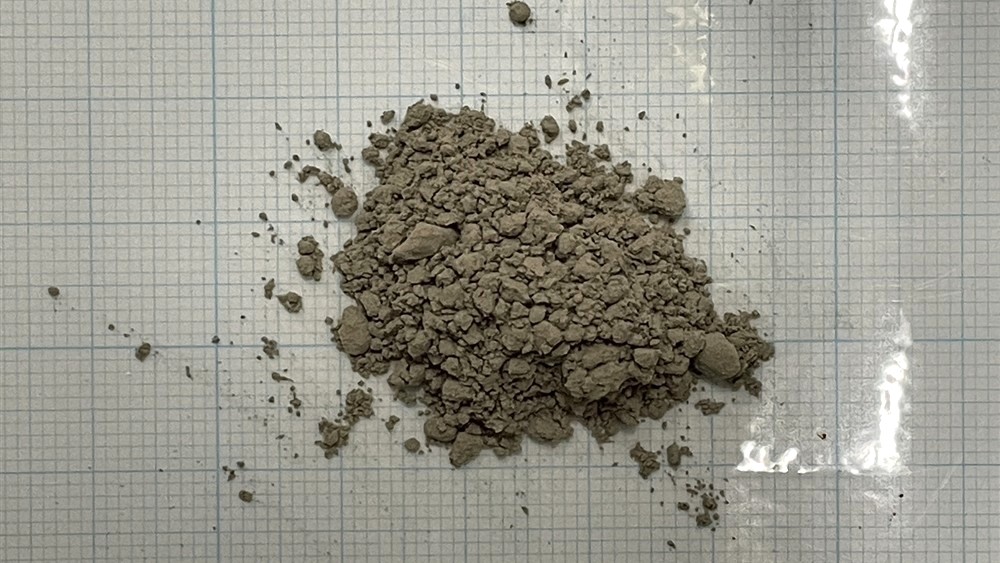
Powders Before Processing
In this case, fly ash powder is used as a sample for the granulation process.The actual incineration ash typically varies in composition and moisture content, and generally contains heavy metals.
When it comes to resource recovery, establishing a stable processing system presents a technical challenge.
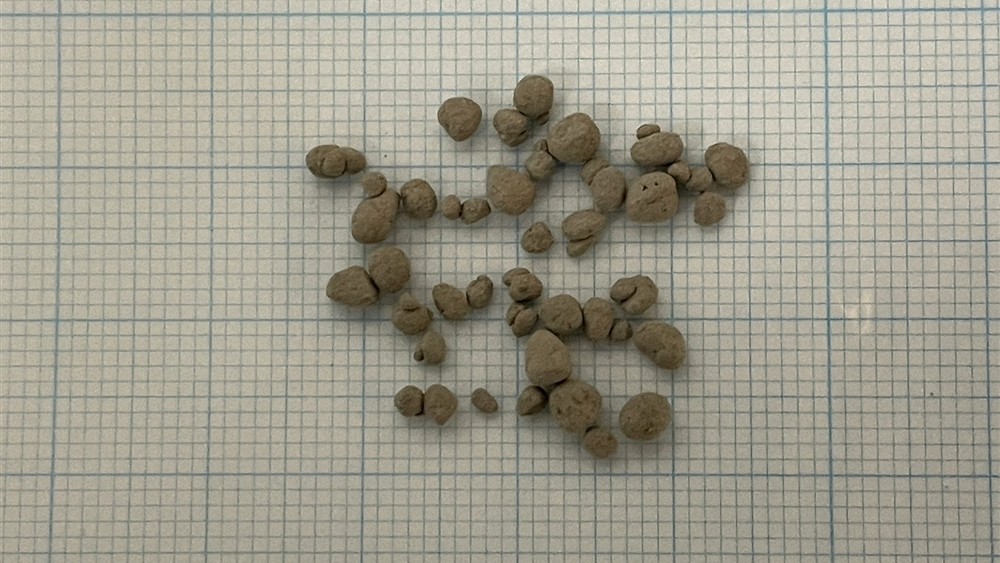
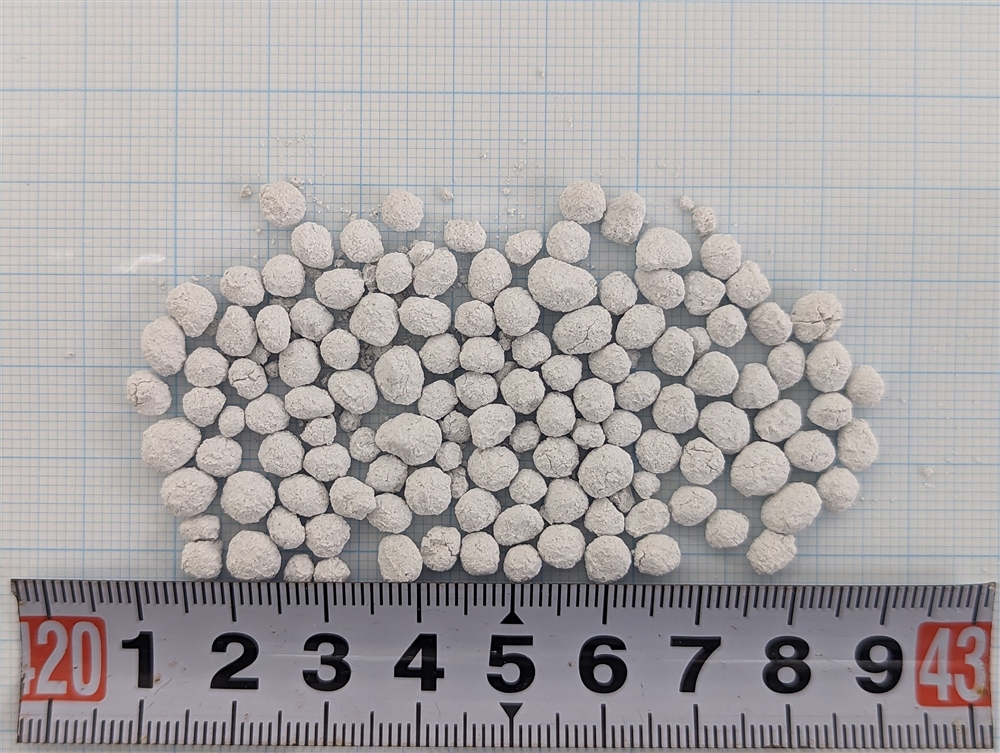
After processing (1-3mm granules)
Challenges: Preventing dust scattering, improving handling properties
We added a binder (water) to the test powder and produced 1–3 mm granules, suitable for feeding into subsequent processes and preventing scattering.
The intensive mixer stands out for enabling complex processes such as mixing and granulation with a single unit, while also allowing operating conditions to be easily adjusted via the touch panel.
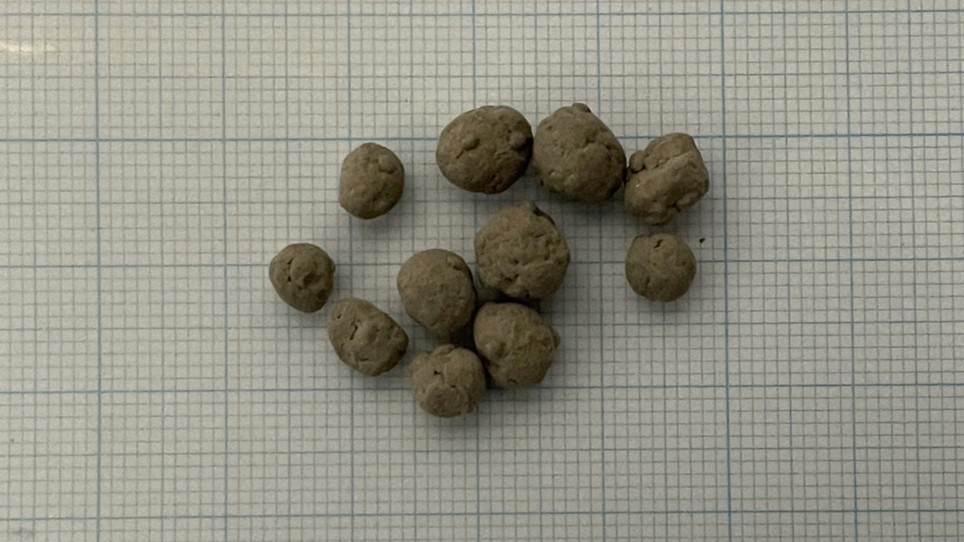
After processing (3-6mm granules)
Challenges: Adjustment of particle size, improvement of handling properties, and enhancement of storability
We added additional binder to the granulated 1–3 mm particles and produced 3–6 mm granules with excellent handling and storage properties.
Operating conditions can be easily adjusted via the touch panel, allowing particle size and granule strength (or granule hardness) to be flexibly tailored for different applications.
You can try the performance of our equipment at our Technical Center using our test machines.
Recommended Products
Eirich Intensive Mixer is a high-speed mixer and granulator designed for a wide range of processing tasks involving raw materials, mixtures, and compounds.Optimal material processing is achieved by selecting the appropriate mixing tool shape and rotation speed according to the application.
By adjusting the operating conditions, a single machine can handle multiple processes such as mixing, granulation, kneading, and slurry preparation.The mixer features a jacketed mixing pan for both cooling and heating, and offers a wide range of customizable options to accommodate various processes.
Advantages of the Eirich mixing principles
- Eccentrically positioned rotor tool (mixing tool)
The rotor tool shape, rotation direction, and speed range can be selected to suit the application. - Tool Set (scrapers)
It scrapes off raw materials adhering to the inner wall and bottom of the mixing pan, while simultaneously promoting efficient material transfer to the rotor tool. - Mixing Pan (mixing vessel)
Through rotation, all raw materials in the mixing pan are continuously supplied to the rotor tool.
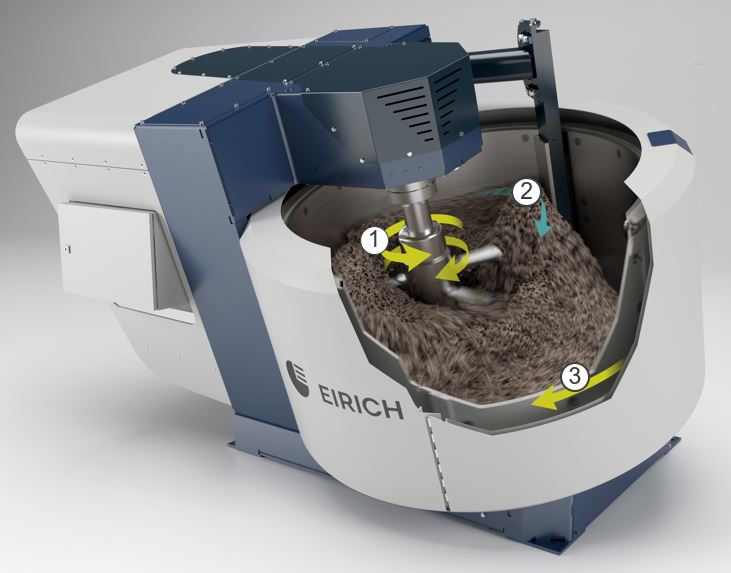
Unique Mechanisms
- Short mixing time and high homogeneity
- Capable of processing raw materials with varying specific gravities
- The rotating mixing pan promotes material movement and reduces residue.
- By selecting the rotor tool shape and adjusting the mixing pan speed, the system can handle complex material processing
- Process integration enables compact and energy-efficient production systems
- Setting optimal operating parameters ensures consistent and reproducible material processing
Below is an overview of the equipment best suited for the process introduced above, along with the test machines currently available at our Technical Center.If you would like more information, please feel free to contact us via the inquiry form.
Eirich Intensive Mixer
| Type | Capacity (L) | Operation Data Log | Cooling Jacket Availability | Test Unit Availability |
|---|---|---|---|---|
| EL1 | 1 | 〇 | × | 〇 |
| EL5 Profi Plus | 5 | 〇 | 〇 | 〇 |
| EL10 Profi Plus | 10 | 〇 | 〇 | × |
| R05T | 40 | 〇 | Operation | 〇 |
| RV12W | 400 | 〇 | Operation | 〇 |
Click here for product details.
Test Unit Availability
here
.
If you would like more information, please feel free to contact us via
the inquiry form
.